
The home coffee machine market in 2026 is becoming less focused on simply increasing pump pressure or adding more settings. Instead, manufacturers are investing heavily in automation, personalization, cold coffee and smarter bean-to-cup brewing.
One of the clearest trends is the rapid expansion of cold drinks. Cold Brew, iced milk beverages and other cold recipes are increasingly becoming standard features of premium automatic machines.
At the same time, manufacturers are introducing intelligent bean adjustment, larger touchscreens, travel-mug-friendly designs and increasingly compact machines.
Several particularly interesting machines arrived or were updated in 2026.
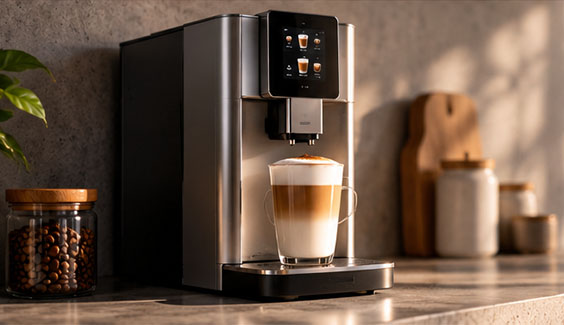
New coffee machines worth watching in 2026
JURA S10 | Fully automatic | Intense Cold Brew and 45 specialties |
JURA A8 | Fully automatic | Only 19 cm wide |
JURA Z10 Obsidian Black | Fully automatic | 51 drinks and larger 5-inch display |
De’Longhi PrimaDonna Aromatic | Fully automatic | Intelligent bean-to-cup adaptation |
De’Longhi Eletta Ultra | Fully automatic | Hot and cold drink selection |
Siemens EQ600 iAroma | Fully automatic | Up to 25 drinks plus XL recipes |
Siemens EQ700 iAroma | Fully automatic | XL beverages and travel-mug support |
Bosch HomeCafé Series 4 | Semi-automatic | Integrated grinder with 30 settings |
Mahlkönig Xenia Brew-by-Sync | Espresso machine | Integrated scale, dual boiler and digital brewing control |
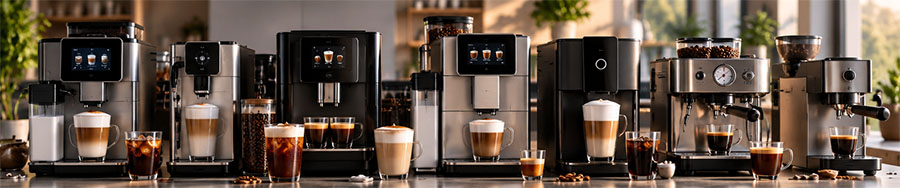
JURA S10 — a new approach to Cold Brew
Introduced in September 2026, the JURA S10 is the new flagship of the company’s S line.
It offers 45 coffee specialties, but its most notable feature is Intense Cold Brew.
Instead of simply brewing hot espresso over ice, JURA uses a dedicated extraction process designed specifically for cold coffee.
The S10 covers four different categories of drinks: Hot Brew, Light Brew, Cold Brew and Sweet Foam.
Despite the extensive drink menu, the machine is relatively compact at approximately 27 cm wide.
Who is the JURA S10 for?
It makes the most sense for users looking for a premium bean-to-cup machine and who actually want to experiment with different coffee recipes.
It is particularly interesting for people who enjoy cold coffee but don’t want to prepare traditional Cold Brew separately.
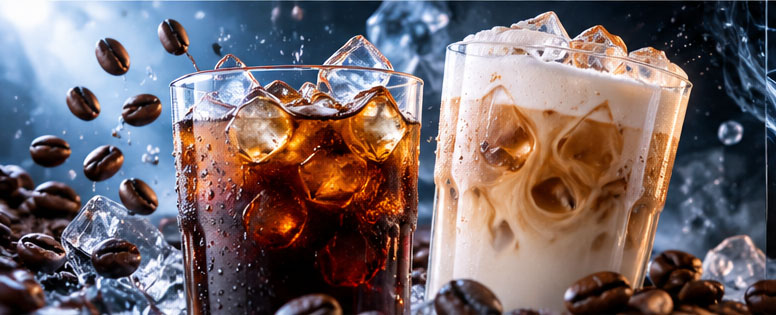
JURA A8 — a 19 cm wide automatic coffee machine
The JURA A8, also introduced in September 2026, addresses a completely different problem: space.
Automatic coffee machines can occupy a significant amount of kitchen countertop. The A8 is only 19 cm wide, making it the slimmest automatic coffee machine JURA had produced at the time of its introduction.
The compact dimensions do not mean switching to capsules.
Inside is a full-size brewing unit and JURA’s Professional Aroma Grinder 3, allowing the machine to prepare drinks from freshly ground beans.
The A8 could represent an important trend in the market. Instead of making every premium machine larger, manufacturers may increasingly compete to create genuinely capable bean-to-cup machines for small kitchens.
JURA Z10 Obsidian Black
JURA also updated its premium Z range in September.
The Z10 Obsidian Black features a 5-inch color touchscreen with around 35% more display area than its predecessor.
The machine offers 51 coffee specialties across four categories:
- Hot Brew;
- Light Brew;
- Cold Brew;
- Sweet Foam.
Machines such as the Z10 demonstrate how far the fully automatic category has moved beyond the traditional espresso-cappuccino concept.
A modern premium automatic coffee machine is increasingly becoming an all-in-one home coffee station.
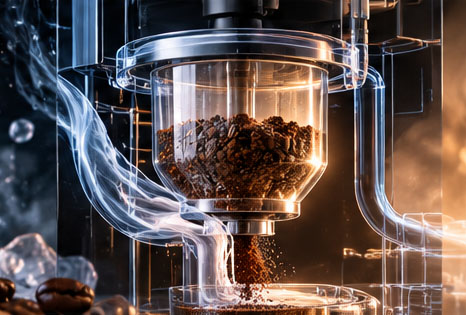
De’Longhi PrimaDonna Aromatic — adapting the machine to the beans
One of De’Longhi’s most technologically interesting launches is the PrimaDonna Aromatic.
Its key idea is intelligent bean-to-cup adaptation.
Different coffees and roast levels can benefit from different brewing parameters. Traditionally, users either adjust those settings themselves or simply continue using the same general configuration.
PrimaDonna Aromatic attempts to automate more of that process.
The machine is also designed around an extensive selection of hot, cold and milk-based beverages.
The important development here isn’t simply another large recipe menu. It is the combination of automation with increasingly sophisticated personalization.
De’Longhi Eletta Ultra — expanding the Hot & Cold concept
Another important 2026 addition is the De’Longhi Eletta Ultra.
The machine continues De’Longhi’s focus on both hot and cold beverages. Its menu ranges from Espresso and Cappuccino to Cold Brew and iced milk-based drinks.
A 4.3-inch full-touch display provides access to drink collections and customization.
De’Longhi has also focused on operating noise. According to the manufacturer, Silent Technology can make the machine up to 30% quieter than previous De’Longhi fully automatic machines.
For everyday use, quieter grinding can be more valuable than adding yet another rarely used coffee recipe — particularly when coffee is prepared early in the morning.
Siemens EQ600 iAroma
Introduced in September 2026, the new Siemens EQ600 iAroma offers up to 25 specialties directly from the machine, with additional options available through the Siemens Home Appliances app.
Siemens has also paid particular attention to larger drinks.
Six XL beverages are available, while the height-adjustable drip tray makes it easier to use large travel mugs.
This reflects another change in the coffee machine market: manufacturers are designing machines not only around espresso and cappuccino cups, but also around coffee prepared directly into a takeaway mug.
Siemens EQ700 iAroma
The Siemens EQ700 iAroma has also been updated.
The latest version adds XL beverages, an optimized interface and a height-adjustable drip tray designed to accommodate larger cups and travel mugs.
A new preheat function helps prevent freshly prepared coffee from losing temperature too quickly.
Rather than introducing one headline technology, the updated EQ700 focuses on improving situations owners encounter every day.
Bosch HomeCafé Series 4 — for people who want to participate in brewing
Not everyone wants a machine to perform the entire process automatically.
Introduced in September 2026, the Bosch HomeCafé Series 4 is a semi-automatic espresso machine with an integrated grinder.
The grinder provides 30 grind settings and five dosing presets.
Unlike a conventional bean-to-cup machine, the HomeCafé uses a portafilter and gives the user considerably more control over espresso preparation.
The machine uses a pump rated at up to 15 bar and precise temperature control to support consistent extraction.
It represents another growing segment: the all-in-one home barista machine.
Users don’t have to buy a separate grinder, but making espresso remains an active process rather than simply pressing a drink icon.
Mahlkönig Xenia Brew-by-Sync — a surprising new espresso machine
One of the more unusual September 2026 launches is the Mahlkönig Xenia Brew-by-Sync.
Mahlkönig is best known for coffee grinders, but Xenia marks the brand’s first home espresso machine.
It combines an integrated scale, dual-boiler architecture and precise temperature control.
More importantly, Brew-by-Sync is designed to connect grinding and espresso preparation within the same digital workflow.
The integrated scale measures espresso directly in the cup, allowing brewing decisions to be linked more closely to the grinding process.
This is almost the opposite philosophy of machines from JURA or De’Longhi.
Instead of hiding coffee preparation from the user, Xenia gives the home barista more information and control while automating measurement and helping maintain consistency.
What about the Philips Café Aromis?
The Philips Café Aromis 8000 Series deserves mention among the most relevant coffee machines of 2026, but there is an important distinction.
The machine was originally announced globally in November 2025. Its North American introduction followed in March 2026.
It is therefore more accurate to describe Café Aromis as a recent-generation machine expanding into new markets during 2026 rather than as an entirely new 2026 model.
Its specifications nevertheless make it highly relevant to current market trends.
Café Aromis offers more than 50 hot and cold recipes.
BrewExtract+ technology automatically optimizes key brewing parameters, while its brewing chamber can handle up to 13.5 grams of coffee.
LatteGo Pro produces both hot and cold milk foam.
Users can adjust strength, temperature, milk quantity and drink volume, while favorite recipes can be stored across multiple user profiles.
Café Aromis also represents a change in Philips’ strategy, moving beyond relatively straightforward LatteGo machines toward a much more feature-rich premium automatic platform.
The biggest coffee machine trends of 2026
Looking at these launches together reveals several clear trends.
Cold Brew is becoming mainstream
Cold coffee is no longer a niche extra.
JURA is developing Intense Cold Brew, De’Longhi continues expanding its Hot & Cold approach, and Philips offers both cold coffee and cold milk drinks.
The coffee machine is becoming a year-round beverage system rather than an appliance used primarily for hot morning coffee.
Machines are beginning to understand the beans
The next stage of automation is adapting not only to the selected drink but also to the coffee beans themselves.
PrimaDonna Aromatic is one of the clearest examples of this direction.
Users increasingly don’t need to understand every brewing parameter because software can take over part of the adjustment process.
Drink menus keep getting larger
JURA S10 offers 45 specialties, Z10 offers 51, and Philips Café Aromis provides more than 50 hot and cold recipes.
Those numbers are impressive, but they shouldn’t become the main reason to choose a machine.
Most owners regularly prepare only a handful of drinks. How well the machine makes your favorite coffee is more important than whether its menu contains 40 or 50 options.
Travel mugs and XL coffee matter more
Siemens has put considerable emphasis on XL recipes and adjustable drip trays.
It’s a small change that reflects real user behavior: many people want to prepare coffee directly into a travel mug before leaving home.
Compact machines are becoming more important
The 19 cm wide JURA A8 is one of the clearest examples.
Fully automatic coffee machines have traditionally required plenty of countertop space. A new generation of narrow bean-to-cup machines could create a distinct category for smaller kitchens.
Automatic machines and home-barista systems are developing in parallel
The market is increasingly moving in two directions.
The first is maximum automation — represented by JURA, Philips, De’Longhi and Siemens.
The second is the assisted home barista approach. Machines such as the Bosch HomeCafé and Mahlkönig Xenia provide more control while using integrated grinders, electronics, scales and temperature management to simplify difficult parts of the process.
The contrast between these two approaches could become one of the most interesting developments in home coffee over the next few years.
Is a 2026 coffee machine worth buying?
There is no need to replace a good coffee machine simply because a newer generation has arrived.
The fundamentals of espresso brewing haven’t suddenly changed, and a well-designed older machine can still make excellent coffee.
The 2026 generation becomes particularly interesting if you want Cold Brew, cold milk beverages, XL drinks, advanced personalization or a more compact design.
New releases can also make previous flagship machines more attractive. Once a successor appears, older premium models may become available at lower prices.
For buyers who don’t need the newest features, that can offer better value.
What’s next for home coffee machines?
The 2026 launches suggest that coffee machines are gradually evolving from simple espresso makers into intelligent home coffee stations.
The next major step may not be increasing recipe counts from 50 to 70.
Instead, manufacturers are likely to focus on making machines better at understanding beans, adjusting extraction automatically, switching between hot and cold preparation and learning individual preferences.
A coffee machine already knows how you like your cappuccino.
The more interesting development is teaching it to understand how to produce that taste from the coffee beans you have just poured into the hopper.
That may ultimately be the most important coffee machine trend of 2026: the transition from “choose your machine settings” to “tell the machine what you want to drink.”
