
It is easy to expect a home coffee maker with a milk reservoir to do everything for you: press a button and get a cappuccino. With the Breville Prima Latte, that is only partly true. It automates coffee dispensing and milk frothing, but you still need to prepare the ground coffee and clean the portafilter afterwards.
That division of tasks determines who this machine suits. The Prima Latte appeals to people who want to choose their coffee and make milk drinks without learning to use a steam wand. Before buying, however, it helps to picture the whole routine, from filling the filter basket to washing the milk container.
This review covers the silver Breville Prima Latte VCF045X-DIM listed on the Breville Romania website. It examines the design and everyday uses based on the documentation; it does not claim to be a hands-on test.
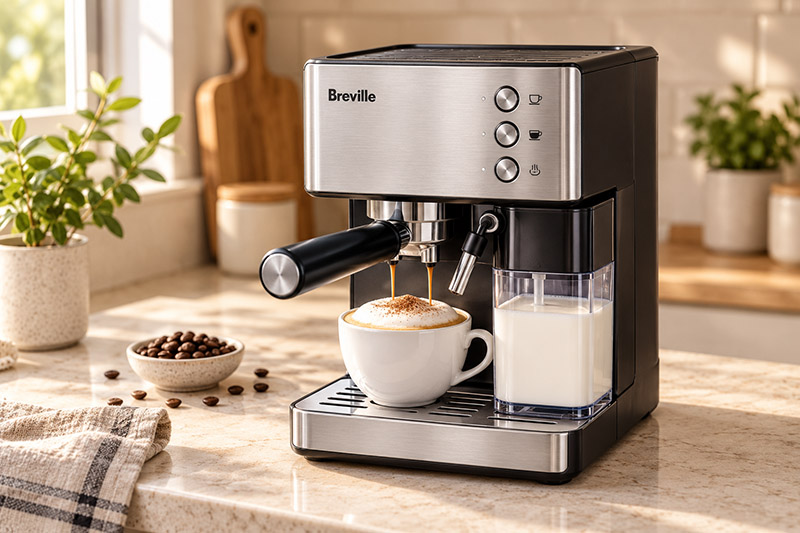
What Is the Breville Prima Latte?
The Prima Latte is a semi-automatic espresso machine with a portafilter. It has no built-in grinder: you fill the filter basket, distribute and tamp the coffee, then lock the portafilter into place. You need to repeat that preparation for the next serving.
The automatic milk system removes the need to hold a pitcher under a steam wand. Rinsing the system after milk drinks remains an essential part of using the machine.
Type | Semi-automatic espresso machine with portafilter |
Coffee | Ground coffee; a filter for 45 mm paper coffee pods is provided |
Drinks | Espresso, cappuccino and latte |
Pump | Advertised 15-bar pump |
Water tank | 1.5 litres |
Milk container | Removable, 480 ml |
Milk frothing | Automatic, with adjustment |
Dimensions listed on the product page | 270 × 330 × 370 mm |
Weight listed on the product page | 6 kg |
Specification source: the Breville Romania product listing.
When choosing a location, leave room to access the reservoir and remove components. Checking the available countertop dimensions alone is not enough: daily maintenance should be convenient too.
Do not use the “15 bar” figure as a measure of flavour. The pump specification does not describe the pressure at the coffee puck throughout brewing and does not guarantee good extraction.
Which Drinks Make the Most Sense?
The Prima Latte’s main use is making cappuccinos and lattes at home when you want to choose the coffee yourself and have the milk frothed automatically.
For someone who mainly drinks straight espresso, other questions matter more: how easy is it to repeat the dose, adjust the grind and control the amount in the cup? The milk reservoir may end up being a rarely used accessory.
Do not judge a drink’s strength by cup size alone. Running too much water through one dose can produce coffee that tastes both watery and unpleasantly bitter. For a large black coffee, a more practical approach is to brew a smaller coffee base and add hot water separately.
The same principle applies to milk drinks. If a cappuccino tastes weak, first try reducing the milk quantity. Passing more water through the same coffee dose will not necessarily solve the problem.
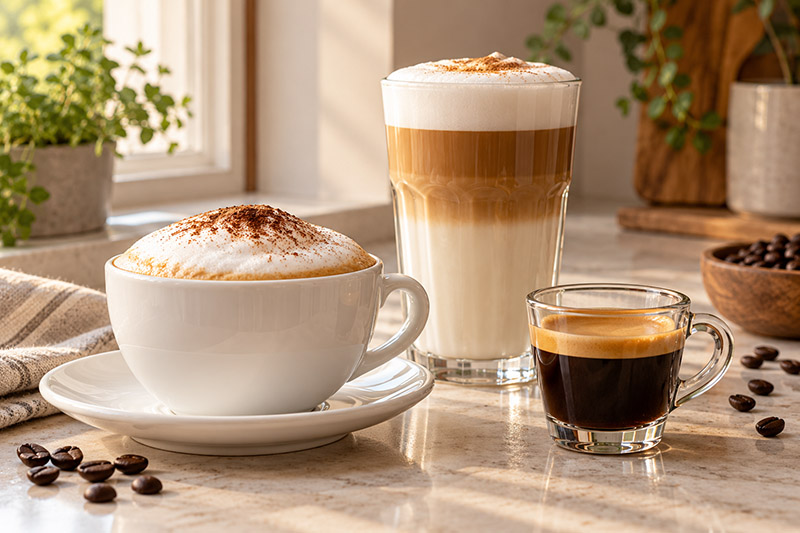
Which Coffee Should You Choose?
For your first attempts, a small bag of medium or medium-dark roast coffee with chocolate, nut or caramel notes is a useful starting point. This is a suggestion, not a limitation of the machine: the right flavour depends on your preferences.
Light roasts usually require more careful adjustment. Avoid buying a large supply before you have made your first satisfying cups.
Pre-Ground Coffee or a Separate Grinder?
Pre-ground coffee makes it easier to get started. Choose an espresso grind, but remember that identical wording on different packets does not guarantee identical results.
A separate burr grinder gives you more scope to adjust the flavour and grind immediately before brewing. It makes sense to consider buying one once you know whether you enjoy the portafilter routine itself.
How to Adjust the Flavour
Change one variable at a time and record the result:
- If the coffee flows quickly and tastes weak, try a slightly finer grind.
- If it only drips out, check whether the grind is too fine or the basket is overfilled.
- If it tastes sharply sour, check warm-up, coffee freshness and flow rate.
- If it tastes dry and bitter, try reducing the beverage yield and comparing it with a less dark roast.
These are starting points for adjustment, not a precise diagnosis based on one flavour characteristic. Acidity, for example, may be a natural feature of the beans.
How to Make Your First Cup
Before first use, rinse and prime the system according to the instructions for your particular version of the machine.
For subsequent drinks, this sequence is useful:
- Fill the tank with fresh drinking water.
- Wait until the machine is ready and warm the cup.
- Choose the filter basket for your serving size.
- Add the coffee, distribute it evenly and tamp it.
- Remove any grounds from the rim and lock the portafilter into place.
- Position the cup and select your drink.
- For cappuccino or latte, use cold milk and point the milk dispensing tube into the cup.
- Complete the required cleaning after brewing.
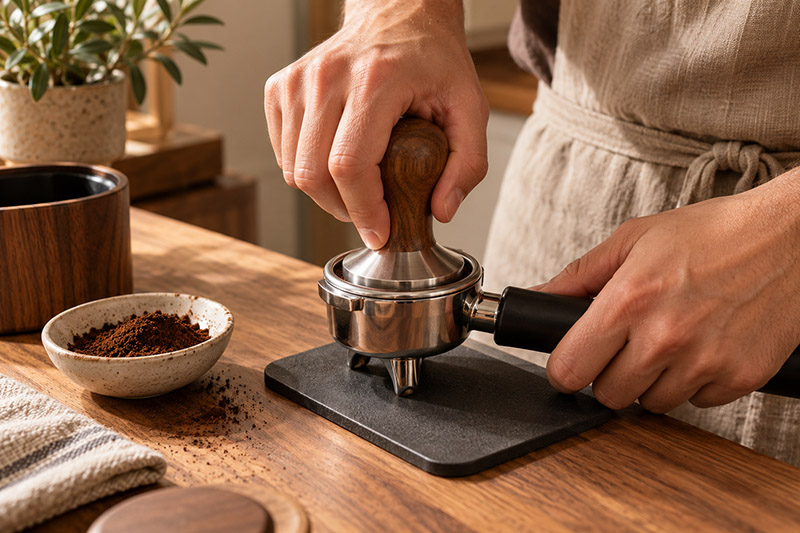
Do not try to compensate for an excessively coarse grind by tamping with excessive force. A consistent dose and an even puck surface are more useful for repeatable results.
Do not remove the portafilter during brewing. Wait for the cycle to finish and for the ready state specified in the manual.
Which Milk Should You Use?
Start with ordinary cold milk that you enjoy drinking. When comparing results, keep conditions consistent: the same temperature, a similar amount of milk and the same foam setting.
For plant-based drinks, barista versions are a reasonable starting point. The label does not guarantee identical foam, however: oat, soy and almond drinks vary considerably in composition. Test a new brand with a small quantity first.
Pour in roughly what you need for the next preparation. This reduces leftovers and makes cleaning easier.
Do not assume that automatic froth will be suitable for latte art. Voluminous foam for a home cappuccino and fluid microfoam for pouring patterns are different results.
Maintenance: What Does the Cleaning Function Do?
Automatic milk-system rinsing helps maintain the machine, but it does not replace washing the removable components.
The manual describes cleaning the milk system by moving the control to the cleaning position and holding the Latte button for three seconds. The container and lid are washed after the cycle. Check the markings against your own manual before proceeding.
The instructions state that the portafilter, filters, milk container and its lid must not be washed in a dishwasher. Descaling is covered separately, with a suggested interval of every two to three months, adjusted for water hardness and use. Choose a descaling product suitable for coffee makers.
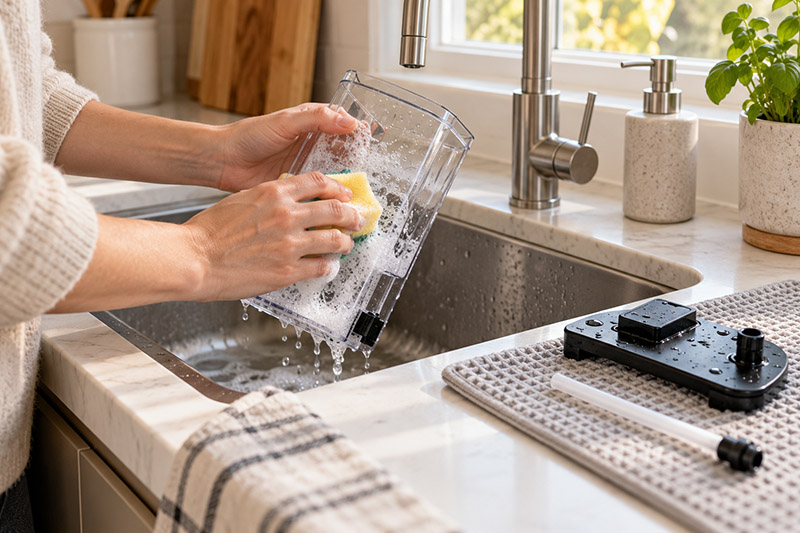
Procedure source: the Breville VCF045X / VCF046X manual.
To avoid putting off maintenance, remove the spent coffee puck, perform the specified rinse and check the drip tray immediately after making your drink. Dried residue is harder to remove than fresh residue.
What to Check If the Results Change
The drink tastes weaker | Compare the dose, grind and amount of water in the cup |
Little or no coffee comes out | Check the water supply, basket filling and grind |
Milk does not froth well | Check milk temperature and milk-system cleanliness |
Coffee leaks around the portafilter | Check that the basket rim is clean, the basket is correctly filled and the portafilter is properly installed |
Milk programmes are unavailable | Check that the milk container is correctly installed |
These are initial checks, not a list of confirmed faults with this model. If a problem persists, consult the manual and contact a service centre. Repeatedly restarting the machine is no substitute for diagnosis.
Who Is the Prima Latte For?
The Breville Prima Latte is worth considering if you regularly drink cappuccino or latte, want to choose your ground coffee and are willing to clean the portafilter after every serving. It lets you take part in preparation while leaving milk frothing to the automatic system.
If you need to make several different cups quickly in the morning with minimal manual work, compare the complete routine with that of a bean-to-cup machine. Include preparing each dose and cleaning afterwards, rather than looking only at dispensing time.
Before buying, ask yourself three questions: do I enjoy working with a portafilter, will I use the milk system, and am I willing to wash it straight away? Your answers will tell you more about how well the Prima Latte fits your kitchen than a promise of one-touch coffee.
Can You Use Whole Coffee Beans?
No. This model uses ground coffee. You need a separate grinder for whole beans.
Does It Take Nespresso or Dolce Gusto Capsules?
No. The supported paper coffee pods are a different format. Check compatibility for a particular pack against the machine’s instructions.
Do You Need Milk in the Container to Make Plain Espresso?
Milk is not required to make espresso.
Why Does the Milk Overpower the Coffee?
There may be too much milk relative to the coffee base. Try a smaller milk serving while keeping the coffee dose unchanged.
Is This Review Based on Hands-On Testing?
No. This article is based on the official product listing and manual. The adjustment tips are practical guidance, not measurements from a tested unit.
