
If your coffee suddenly tastes bitter, your machine becomes louder, or brewing takes longer than usual, there’s a good chance mineral buildup is the problem. Regular descaling is one of the most important maintenance steps for any coffee machine, yet many people either forget about it or do it too late.
In this guide, you’ll learn the ideal descale coffee machine frequency, the signs your machine needs cleaning, and how water quality affects maintenance schedules. Whether you own an espresso machine, bean-to-cup model, pod system, or drip coffee maker, proper descaling helps improve taste, extend machine life, and prevent expensive repairs.
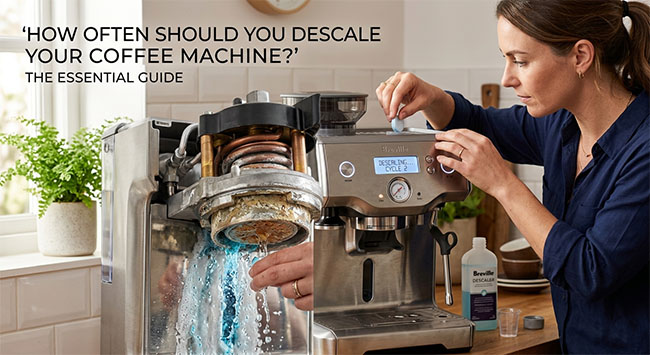
What Does Descaling a Coffee Machine Mean?
Descaling removes mineral deposits — mainly calcium and magnesium — that accumulate inside your coffee machine over time. These deposits are commonly called limescale.
When water heats inside the machine, minerals remain on internal components such as:
- Boilers
- Heating elements
- Pipes
- Pumps
- Steam wands
Without regular cleaning, scale buildup restricts water flow and reduces heating efficiency.
Why Descaling Matters
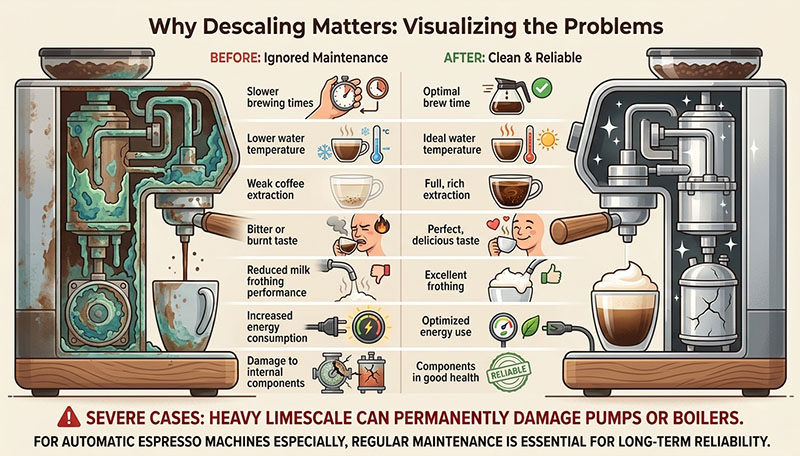
Ignoring descaling can lead to several problems:
- Slower brewing times
- Lower water temperature
- Weak coffee extraction
- Bitter or burnt taste
- Reduced milk frothing performance
- Increased energy consumption
- Damage to internal components
In severe cases, heavy limescale buildup can permanently damage pumps or boilers.
For automatic espresso machines especially, regular maintenance is essential for long-term reliability.
How Often Should You Descale a Coffee Machine?
The ideal descale coffee machine frequency depends on three main factors:
- water hardness;
- machine type;
- daily usage.
Here’s a general guideline:
Machine Type | Soft Water | Medium Water | Hard Water |
Espresso Machine | Every 4–6 months | Every 2–3 months | Every 4–8 weeks |
Bean-to-Cup Machine | Every 3–5 months | Every 2 months | Monthly |
Capsule Coffee Machine | Every 4–6 months | Every 3 months | Every 6–8 weeks |
Drip Coffee Maker | Every 6 months | Every 3–4 months | Every 1–2 months |
If your machine has a built-in descaling alert, follow the manufacturer’s recommendation.
Water Hardness Changes Everything
Hard water contains more dissolved minerals, which dramatically increases limescale buildup.
In many regions, especially parts of Europe and North America, tap water is considered moderately hard or hard. If you use untreated tap water daily, your coffee machine may need descaling much more often.
Signs You Probably Have Hard Water
- White residue around faucets
- Spots on dishes or kettles
- Scale inside electric kettles
- Dry skin after showering
Using filtered water can significantly reduce scale buildup and extend the interval between descaling cycles.
Signs Your Coffee Machine Needs Descaling
Even if you forgot your last cleaning schedule, your machine usually gives warning signs.
Coffee Takes Longer to Brew
Scale restricts water flow inside the system.
Coffee Temperature Drops
Mineral buildup affects heating efficiency.
Machine Becomes Noisy
Pumps work harder when pipes narrow from limescale.
Smaller Coffee Volume
Restricted flow reduces output.
Bitter or Metallic Taste
Scale impacts extraction quality and water temperature consistency.
Steam Wand Performance Gets Worse
Milk frothing becomes weaker or inconsistent.
Automatic Machines vs Manual Machines
Fully automatic coffee machines often require more frequent maintenance because they contain:
- Internal milk systems
- Multiple valves
- Complex tubing
- Integrated grinders
- Automatic rinsing systems
Manual espresso machines are easier to inspect and clean, but still need regular descaling to protect boilers and pumps.
Can You Descale Too Often?
Yes — excessive descaling can also cause wear over time, especially if aggressive chemicals are used too frequently.
Avoid unnecessary descaling cycles if:
- you use softened or filtered water;
- your machine has minimal usage;
- no scale symptoms are present.
The goal is balance: enough cleaning to prevent buildup without exposing seals and internal components to harsh chemicals too often.
Best Water for Coffee Machines
The best solution is not distilled water or extremely hard tap water.
Most manufacturers recommend:
- Filtered water
- Softened water
- Balanced mineral content
Distilled water may affect extraction quality and can confuse water sensors in some automatic machines.
Which Descaling Products Work Best?
There are several common options:
Manufacturer Descaling Solutions
Usually safest for warranty protection.
Universal Coffee Machine Descalers
Widely available and compatible with most brands.
Citric Acid-Based Descalers
Popular for eco-friendly cleaning.
Vinegar (Not Recommended for Many Machines)
While vinegar removes scale, many manufacturers discourage it because:
- strong odor can remain;
- acid concentration may damage seals;
- taste contamination is possible.
Always check your machine manual before using homemade solutions.
How Long Does Descaling Take?
Most modern coffee machines complete a descaling cycle in:
- 15–45 minutes for automatic machines;
- 10–20 minutes for drip brewers;
- 20–40 minutes for espresso machines.
Many bean-to-cup machines automate the process through guided cleaning programs.
Tips to Reduce Descaling Frequency
You can minimize limescale buildup with a few habits:
- Use filtered water
- Empty the water tank daily
- Avoid leaving stagnant water inside
- Clean steam wands after use
- Replace water filters regularly
- Run rinse cycles often
These small steps can reduce maintenance needs and improve coffee flavor consistency.
Does Descaling Improve Coffee Taste?
Absolutely.
Water temperature stability and proper extraction are essential for good coffee. Scale buildup interferes with both.
After descaling, many users notice:
- Cleaner flavor
- Better crema
- Hotter coffee
- Stronger aroma
- Faster brewing
In many cases, poor-tasting coffee is not caused by beans — it is caused by an overdue machine cleaning.
Final Thoughts
Understanding the correct descale coffee machine frequency helps protect your investment and keeps your coffee tasting its best.
For most households, descaling every 1–3 months is a safe average, especially if you use tap water daily. Machines used heavily or in hard-water regions may require monthly maintenance.
Regular descaling improves:
- Coffee flavor
- Brewing speed
- Machine lifespan
- Energy efficiency
- Milk frothing performance
A well-maintained coffee machine consistently produces better coffee and avoids costly repairs later.
FAQ
How do I know if my coffee machine needs descaling?
Common signs include slower brewing, lower coffee temperature, strange noises, reduced water flow, and bitter taste.
Can I use vinegar to descale my coffee machine?
Some machines allow it, but many manufacturers discourage vinegar because it may damage seals or leave odors behind.
Does filtered water prevent descaling?
Filtered water reduces mineral buildup significantly, but most machines still need occasional descaling.
What happens if I never descale my coffee machine?
Scale buildup can damage internal components, reduce performance, and eventually cause machine failure.
Is descaling the same as cleaning?
No. Cleaning removes coffee oils and residue, while descaling removes mineral deposits from water.
