
Freshly ground coffee is one of the key factors that determines the taste and aroma of a cup of coffee. While electric grinders are common in many kitchens, manual coffee grinders remain popular among coffee enthusiasts, travelers, and people who value simplicity and control in the brewing process.
In this review, we’ll explore how manual coffee grinders work, their practical advantages, grind quality, and convenience for everyday coffee preparation.

What Is a Manual Coffee Grinder?
A manual coffee grinder is a device that grinds coffee beans using a hand-operated mechanism instead of an electric motor. The grinding process is powered by turning a handle connected to burrs that crush the beans into grounds.
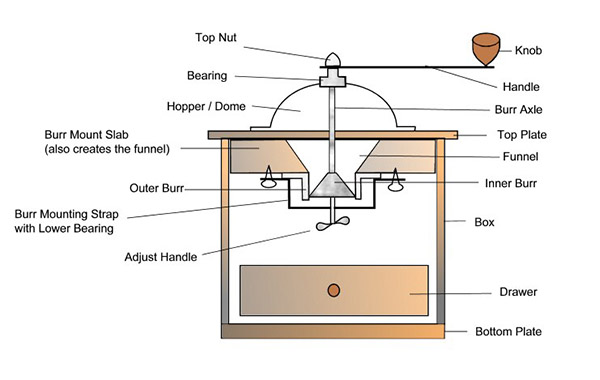
Manual grinders typically consist of:
- A hopper for whole coffee beans
- Grinding burrs (steel or ceramic)
- A hand crank or handle
- A ground coffee container
Most quality manual grinders use burr grinding mechanisms, which provide more consistent results than blade grinders.
How Manual Coffee Grinders Work
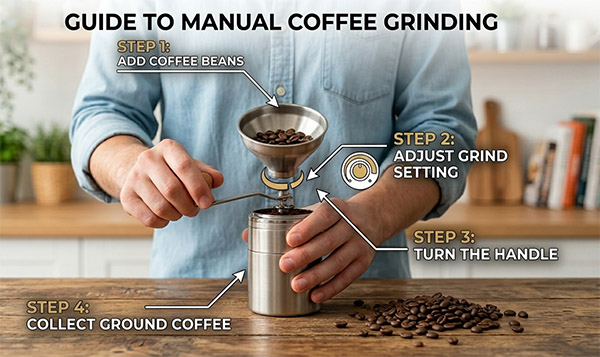
Manual grinders operate using two burrs that rotate against each other. When the handle is turned, beans move through the burrs and are crushed into evenly sized particles.
The grind size can usually be adjusted using a dial or screw mechanism. This allows users to select the appropriate grind size for different brewing methods.
Typical grind settings include:
- Extra coarse – cold brew
- Coarse – French press
- Medium – drip coffee makers
- Medium-fine – pour-over coffee
- Fine – espresso
Because burrs grind the beans gradually, the result is more uniform than blade grinders.
Practical Advantages of Manual Coffee Grinders
Manual grinders offer several practical benefits, especially for certain types of coffee drinkers.
1. Portability
Manual grinders are typically compact and lightweight, making them ideal for:
- Travel
- Camping
- Office use
- Small kitchens
They do not require electricity, which allows them to be used almost anywhere.
2. Quiet Operation
Unlike electric grinders, manual grinders produce very little noise. This can be useful when preparing coffee early in the morning or in shared spaces.
3. Simplicity and Reliability
Manual grinders have fewer mechanical parts than electric models. Because of this, they are generally:
- Durable
- Easy to maintain
- Less likely to break
Many high-quality manual grinders can last for years with proper care.
4. Lower Cost
Manual grinders are usually more affordable than high-quality electric burr grinders. This makes them a practical option for beginners who want consistent grinding without investing in expensive equipment.
Grinding Quality and Consistency
The quality of the grind depends largely on the burr type and grinder design.
Burr Type
Most manual grinders use either:
- Ceramic burrs
- Stainless steel burrs
Ceramic burrs are resistant to heat and corrosion, while steel burrs often provide faster grinding and more precise particle sizes.
Consistency
A good manual burr grinder can produce uniform coffee particles, which is important for balanced extraction during brewing.
Uneven grinding can lead to:
- Over-extraction of fine particles
- Under-extraction of larger particles
- Bitter or weak coffee flavor
Because burr grinders control particle size more effectively, they help produce better-tasting coffee.
Ease of Use and Convenience
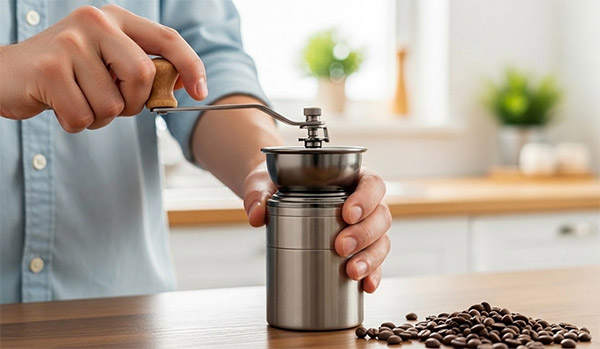
Manual coffee grinders are simple to use, but they do require physical effort.
Grinding Time
Grinding coffee manually usually takes:
- 30–60 seconds for one cup;
- 1–2 minutes for multiple servings.
The time depends on the grind size and the grinder design.
Capacity
Most manual grinders are designed for 1–2 servings of coffee. Larger quantities require multiple grinding cycles.
Cleaning and Maintenance
Manual grinders are relatively easy to maintain. Basic maintenance includes:
- Brushing out coffee residue
- Occasional disassembly for deeper cleaning
- Keeping burrs dry and free from oils
Regular cleaning helps maintain grind quality and prevents stale flavors.
When a Manual Coffee Grinder Is the Best Choice
Manual grinders are particularly useful in several situations.
They are ideal for:
- Pour-over brewing at home
- Travel coffee setups
- Camping or outdoor use
- Small kitchens with limited space
- Coffee enthusiasts who prefer hands-on brewing
However, they may be less practical for people who prepare large amounts of coffee daily.
Limitations of Manual Coffee Grinders
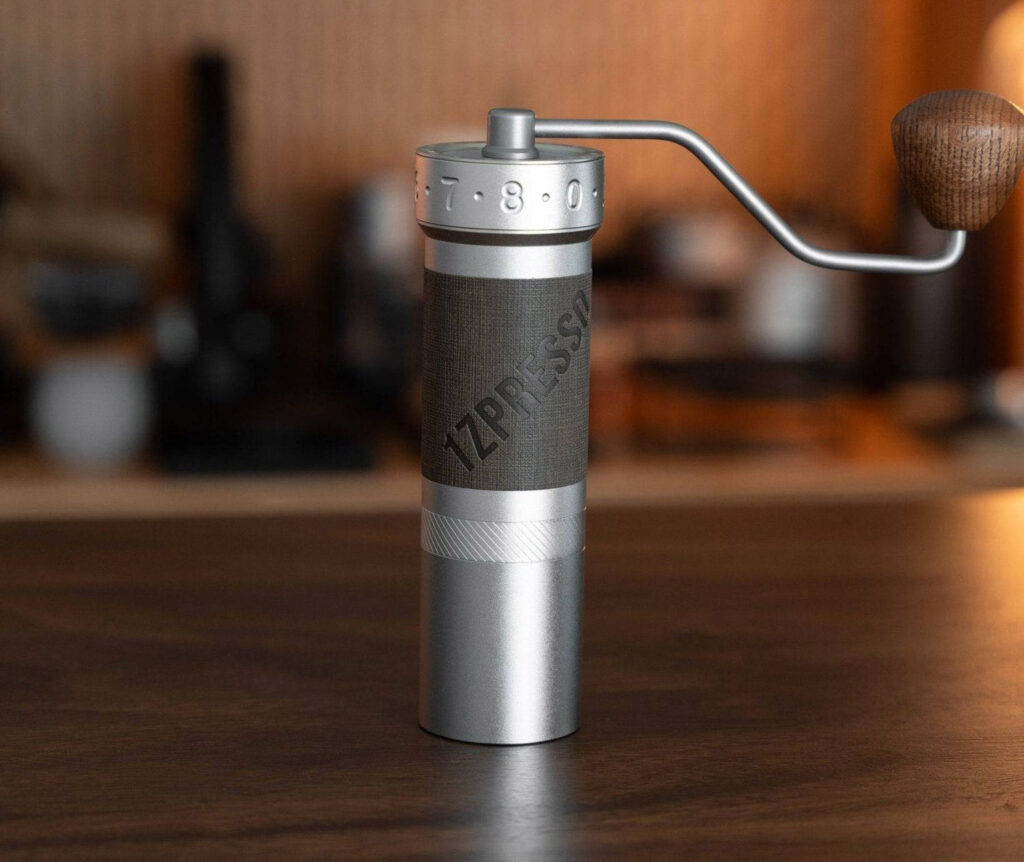
Despite their advantages, manual grinders also have some limitations.
Physical Effort
Grinding coffee manually requires effort, especially when grinding for espresso or multiple cups.
Slower Grinding
Electric grinders can grind coffee in seconds, while manual grinding takes more time.
Limited Capacity
Manual grinders usually hold smaller amounts of coffee beans compared to electric grinders.
For households that prepare several cups of coffee every morning, an electric grinder may be more convenient.
Tips for Choosing a Good Manual Coffee Grinder
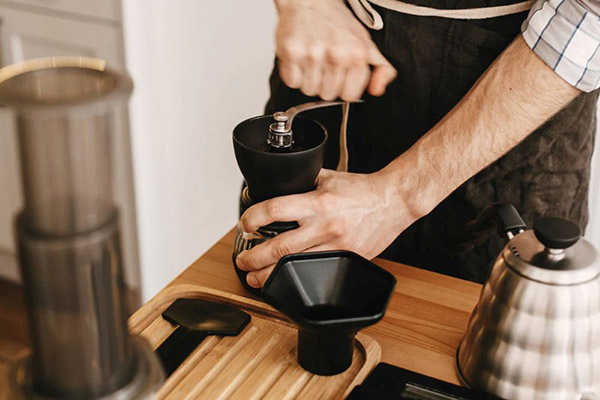
When selecting a manual grinder, several factors influence performance and durability.
Burr Quality
Look for grinders with high-quality burrs, preferably steel or durable ceramic.
Grind Adjustment System
A good grinder should offer multiple grind settings suitable for different brewing methods.
Build Quality
Grinders made from stainless steel or aluminum tend to be more durable than plastic models.
Stability and Ergonomics
A comfortable handle and stable body make grinding easier and more efficient.
Conclusion
Manual coffee grinders offer a practical and reliable way to grind coffee beans with precision and control. They are compact, quiet, and require no electricity, making them ideal for travel, small kitchens, and simple coffee setups.
While they require more effort and time compared to electric grinders, many coffee enthusiasts appreciate the consistent grind quality and hands-on brewing experience they provide.
For those who value portability, simplicity, and fresh coffee grounds, a manual burr grinder remains a practical and effective tool in any coffee brewing setup.
