
In the world of specialty coffee, coffee machines deliver speed and consistency — but nothing replicates the rich, ritualistic experience of brewing authentic Turkish coffee on the stovetop. At the heart of that tradition sits the coffee turk (also known as a cezve or ibrik). This humble copper or stainless-steel pot isn’t just a brewing vessel; it’s the key to achieving the signature thick foam, intense flavor, and fine sediment that define Turkish coffee.
Whether you’re a seasoned coffee-machine enthusiast looking to expand your repertoire or a complete beginner curious about traditional methods, this detailed guide to coffee turks will walk you through the three most critical factors: material, shape, and size. By the end, you’ll know exactly how to choose (and care for) a turk that delivers café-quality results at home — every single time.
What Is a Coffee Turk and Why Does It Matter?
A coffee turk is a small, long-handled pot specifically designed for boiling finely ground coffee directly with water and sugar (if desired). Unlike French presses or espresso machines, the turk allows full immersion and precise control over heat, creating the characteristic kaymak (crema-like foam) and leaving grounds at the bottom of your cup for fortune-telling if you’re feeling traditional.
Turkish coffee has been UNESCO-listed as Intangible Cultural Heritage since 2013, and the turk is what makes the method possible. Modern coffee machines excel at espresso or drip, but a well-chosen turk brings an entirely different sensory experience — slower, more aromatic, and deeply personal.
Coffee Turk Materials: How the Pot Affects Flavor, Heat, and Longevity
The material of your turk directly influences heat distribution, flavor neutrality, maintenance, and even the final taste of your coffee. Here’s a breakdown of the most popular options.

1. Copper Turks (The Traditional Gold Standard)
- Pros: exceptional heat conductivity for even boiling and perfect foam formation. Retains heat longer, allowing the coffee to develop complex aromas. Classic hammered or polished finish looks stunning on any countertop.
- Cons: requires a food-safe tin or silver lining to prevent copper leaching (modern versions usually come pre-lined). Needs regular polishing to prevent tarnish. Higher price point.
- Best for: coffee purists who want the most authentic experience. Copper is the material used in Turkey for centuries.
- Pro tip: look for “tin-lined copper” or “food-grade lined” models. Re-tinning every 1–2 years keeps it safe and beautiful.
2. Brass Turks
- Pros: similar heat performance to copper at a lower cost. Durable and develops a lovely patina over time.
- Cons: can impart a slight metallic taste if not properly lined. Heavier than stainless steel.
- Best for: budget-conscious users who still want traditional aesthetics.
3. Stainless Steel Turks (Modern & Practical)
- Pros: extremely durable, dishwasher-safe (check model), rust-resistant, and completely neutral in flavor. No maintenance beyond basic cleaning. Affordable and lightweight.
- Cons: heats less evenly than copper, so you must watch the flame closely to avoid scorching. Less “romantic” look.
- Best for: busy households, coffee-machine owners who want a low-effort backup method, or anyone prioritizing ease of use.
4. Ceramic or Porcelain Turks
- Pros: excellent heat retention, zero metallic taste, and beautiful designs. Great for slow, gentle brewing.
- Cons: fragile — can crack under sudden temperature changes. Slower to heat up.
- Best for: home décor lovers and those who brew small batches on induction or electric stoves.
5. Clay/Earthenware Turks (Rare but Flavor-Enhancing)
- Pros: porous material absorbs coffee oils over time, imparting deeper, earthier notes with each use (similar to seasoning a cast-iron pan).
- Cons: not dishwasher-safe, can absorb odors if not seasoned properly, and more prone to cracking.
- Best for: advanced enthusiasts seeking unique flavor development.
Quick Comparison Table
Material | Heat Conductivity | Flavor Neutrality | Durability | Maintenance | Price Range |
Copper (lined) | Excellent | Good | High | Medium | $$$ |
Brass | Very Good | Fair | High | Medium | $$ |
Stainless Steel | Good | Excellent | Very High | Low | $–$$ |
Ceramic | Fair | Excellent | Medium | Low | $$ |
Clay | Fair | Flavor-building | Low | High | $$ |
Coffee Turk Shape: Why Design Matters More Than You Think
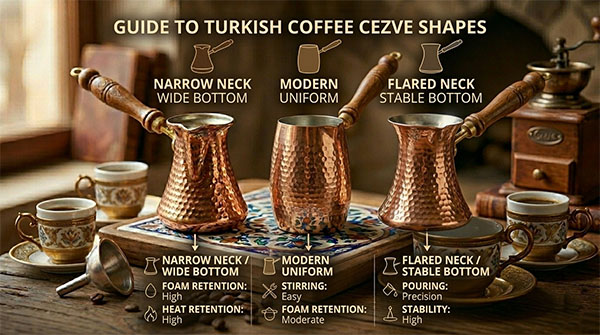
The classic turk shape is no accident — it’s engineered for perfect Turkish coffee.
- Wide base → Allows even heating and quick boil without scorching.
- Narrow neck → Traps rising foam (the prized kaymak), prevents overflow, and concentrates aromas.
- Long wooden or metal handle → Keep your hand safely away from the heat source.
Variations you’ll encounter:
- traditional conical – most authentic, best foam control;
- straight-sided – easier to clean but slightly less foam retention;
- bulbous or “waisted” – modern designs that still respect the physics of boiling.
Handle tip: Wooden handles stay cooler and look premium; metal ones are more durable but require a cloth or holder.
The shape directly affects brewing physics: the narrow top creates a natural “lid” of foam that seals in volatile oils and aromas while the grounds settle quickly.
Coffee Turk Sizes: How Many Cups Do You Really Need?
Turkish coffee is traditionally served in small fincan (demitasse) cups — about 50–75 ml each. Turks are sized by how many cups they comfortably brew:
- 1–2 cup (100–200 ml): ideal for solo rituals or couples. Compact, heats fastest, perfect for testing new coffee blends;
- 3–4 cup (300–400 ml): most popular household size. Great balance of control and volume;
- 5–6 cup (500–600 ml): excellent for small gatherings or families;
- 8+ cup (800+ ml): party-sized — still delivers consistent results but requires more attention to heat.

Choosing the right size checklist:
- Daily solo use → 1–2 cup
- Sharing with 1–2 people → 3–4 cup
- Entertaining guests → 5–6 cup or larger
- Storage space limited → Smaller models (they nest beautifully)
Pro tip: Never fill your turk more than ¾ full — the foam needs room to rise dramatically!
How to Brew Perfect Turkish Coffee in Your New Turk (Quick Method)
- Add coffee (1 heaped teaspoon per cup), sugar (optional), and cold water.
- Stir gently and place over low–medium heat.
- Watch for foam — remove from heat just as it rises to the neck.
- Let settle for 10–15 seconds, pour slowly into cups.
- Serve immediately with a glass of water and Turkish delight.
Caring for Your Coffee Turk: Longevity Tips
- Copper/Brass: hand-wash only, dry immediately, polish occasionally.
- Stainless Steel: dishwasher-safe in most cases.
- Ceramic/Clay: avoid temperature shocks; season new clay turks with a few test brews.
- General rule: never use abrasive cleaners that could scratch the interior.
