
A coffee machine can brew excellent coffee for years — but only if it is cleaned regularly. Over time, coffee oils, mineral deposits, old milk residue, and moisture build up inside the machine. This affects taste, brewing pressure, temperature, and even the lifespan of the equipment.
If your coffee suddenly tastes bitter, weak, sour, or “flat,” the problem may not be the beans. In many cases, the machine simply needs proper cleaning and descaling.
In this guide, you will learn exactly how to clean a coffee machine, how often you should do it, and why descaling a coffee machine is one of the most important maintenance tasks for home coffee lovers.
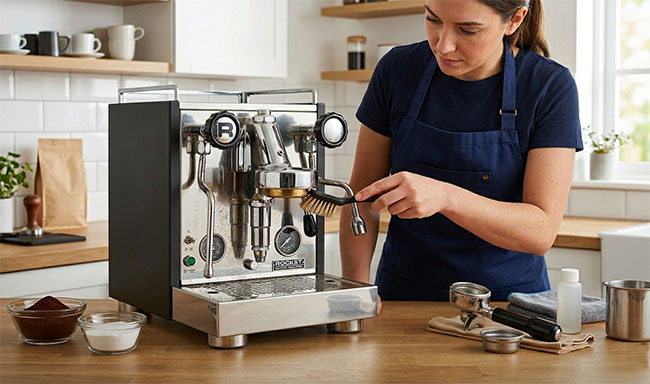
Why Cleaning a Coffee Machine Matters
Many people only rinse the removable parts and assume the machine is clean. However, internal components collect buildup that is not always visible.
Common problems caused by poor maintenance include:
- Bitter or stale coffee flavor
- Slow brewing speed
- Weak espresso extraction
- Blocked water flow
- Milk system contamination
- Mold and bacteria growth
- Reduced machine lifespan
Regular cleaning improves:
- Coffee taste
- Brewing consistency
- Machine reliability
- Energy efficiency
- Hygiene and safety
For automatic espresso machines, maintenance is especially important because they contain internal brewing systems, pumps, grinders, and milk circuits.
How Often Should You Clean a Coffee Machine?
The ideal cleaning schedule depends on how often you use the machine and what type of coffee maker you own.
Daily Cleaning
You should:
- empty used coffee grounds;
- rinse drip trays;
- clean milk frothers or steam wands;
- wipe external surfaces;
- replace standing water.
Weekly Cleaning
You should:
- wash removable brew parts;
- clean coffee oil residue;
- rinse bean containers;
- deep-clean milk systems.
Monthly Cleaning
You should:
- run coffee oil cleaning tablets;
- inspect filters and seals;
- clean grinder areas carefully.
Descaling Every 1–3 Months
This depends on:
- water hardness;
- machine usage;
- whether you use filtered water.
Hard water causes mineral buildup much faster.
What Happens During Descaling?
Descaling removes mineral deposits (mostly calcium and magnesium) that accumulate inside the heating system and water lines.
These deposits:
- reduce heating efficiency;
- restrict water flow;
- increase brewing pressure;
- damage internal components.
Many people confuse regular cleaning with descaling, but they are different processes.
Cleaning Removes:
- Coffee oils
- Milk residue
- Dirt and bacteria
Descaling Removes:
- Limescale and mineral buildup
Both are necessary for proper maintenance.
Signs Your Coffee Machine Needs Descaling
Your machine may need immediate descaling if you notice:
- coffee takes longer to brew;
- water temperature drops;
- strange noises during brewing;
- smaller coffee volume;
- steam pressure becomes weak;
- warning lights appear;
- coffee tastes dull or metallic.
Some modern machines automatically notify users when descaling is required.
How to Clean a Coffee Machine Step by Step
1. Turn Off and Unplug the Machine
Safety first. Let the machine cool before cleaning any hot components.
2. Empty and Rinse Removable Parts
Remove:
- water tank;
- drip tray;
- coffee grounds container;
- portafilter (for espresso machines);
- milk containers.
Wash them using:
- warm water;
- mild dish soap;
- soft cloth or sponge.
Avoid abrasive scrubbers that can damage surfaces.
3. Clean the Brew Group
For fully automatic coffee machines, the brew group is one of the most important parts.
If removable:
- take it out;
- rinse with warm water only;
- let it air dry completely.
Do not use soap unless the manufacturer recommends it.
If non-removable:
- use the machine’s cleaning cycle;
- run cleaning tablets when required.
4. Clean the Steam Wand or Milk Frother
Milk residue spoils quickly and can clog the system.
After every milk drink:
- purge steam immediately;
- wipe the wand;
- rinse milk tubes.
For deep cleaning:
- soak removable parts in warm water;
- use a milk system cleaner if necessary.
Neglecting milk systems is one of the most common causes of bad odors in espresso machines.
5. Remove Coffee Oil Residue
Coffee beans contain natural oils that accumulate inside:
- Brew units
- Portafilters
- Filters
- Internal pipes
Use cleaning tablets specifically designed for coffee machines.
This step is especially important for:
- Espresso machines
- Bean-to-cup coffee makers
- Super-automatic machines
How to Descale a Coffee Machine Properly
Step 1: Prepare Descaling Solution
Use:
- Manufacturer-approved descaler
- Or a compatible coffee machine descaling liquid
Avoid strong homemade acids that may damage seals or internal metals.
Some people use vinegar, but many manufacturers discourage this because:
- The smell lingers
- It may damage components
- Residue can affect taste
Step 2: Fill the Water Tank
Mix the descaling solution according to instructions and pour it into the reservoir.
Step 3: Run the Descaling Program
Most modern machines have a built-in descaling mode.
If your machine does not:
- run half the solution through the coffee outlet;
- run the rest through the steam wand;
- pause occasionally to let the solution work.
Step 4: Rinse Thoroughly
This step is critical.
After descaling:
- empty the tank;
- fill with clean water;
- run at least 1–2 full rinse cycles.
Any leftover descaling liquid can affect coffee taste.
How to Clean Different Types of Coffee Machines
Drip Coffee Makers
Focus on:
- Carafe cleaning
- Filter basket washing
- Water reservoir descaling
These machines are simple but still collect mineral deposits.
Espresso Machines
Require:
- Backflushing
- Portafilter cleaning
- Steam wand maintenance
- Regular descaling
Espresso machines accumulate coffee oils faster because of pressure extraction.
Bean-to-Cup Machines
Need the most maintenance because they combine:
- Grinder
- Brewing system
- Milk system
- Internal water circuits
Automatic cleaning programs help, but manual cleaning is still necessary.
Capsule Coffee Machines
Even pod machines require descaling.
Capsules reduce coffee residue buildup, but water minerals still accumulate internally.
Best Practices to Keep Your Coffee Machine Clean Longer
Use Filtered Water
Filtered water:
- Reduces limescale buildup
- Improves coffee taste
- Extends machine lifespan
Empty the Drip Tray Frequently
Standing water encourages bacteria and mold growth.
Avoid Oily Coffee Beans
Very oily dark-roast beans can clog grinders and brew systems.
Never Leave Milk in Containers Overnight
Milk systems should always be rinsed after use.
Common Coffee Machine Cleaning Mistakes
| Delaying descaling can permanently damage heating systems. |
| Occasional use may work for some drip machines, but it is not ideal for premium espresso equipment. |
| Internal buildup is often the real issue. |
| Internal buildup is often the real issue. |
Can a Dirty Coffee Machine Affect Coffee Taste?
Absolutely!
Old coffee oils oxidize quickly and create bitter, stale flavors. Mineral buildup also changes brewing temperature and extraction quality.
Even premium coffee beans cannot produce good espresso in a poorly maintained machine.
Many users are surprised how dramatically coffee flavor improves after proper cleaning and descaling.
Final Thoughts
Learning how to clean a coffee machine properly is one of the easiest ways to improve coffee quality at home. Regular maintenance protects your machine, improves taste, and prevents expensive repairs.
The most important habit is consistency:
- quick daily cleaning;
- weekly deep cleaning;
- regular descaling.
If you invest in a quality espresso machine, maintaining it correctly can extend its life for many years.
Whether you use a simple drip brewer or a premium automatic espresso machine, proper cleaning is essential for consistently great coffee.
